Flask Fundamentals
10 min read
What is Flask?
What is Flask?
Flask is a lightweight web framework for Python used to build web applications and APIs.
It provides the essential tools to handle requests, define routes, and return responses.
Why Flask Exists
Building web applications from scratch is complex.
You would need to:
- Handle HTTP requests manually
- Manage routing
- Generate responses
- Structure your application
Flask simplifies this process by providing these features out of the box.
What Makes Flask Different
Flask is known as a micro-framework.
This means:
- It provides only the core features
- You add extra functionality when needed
- It stays simple and flexible
How Flask Works
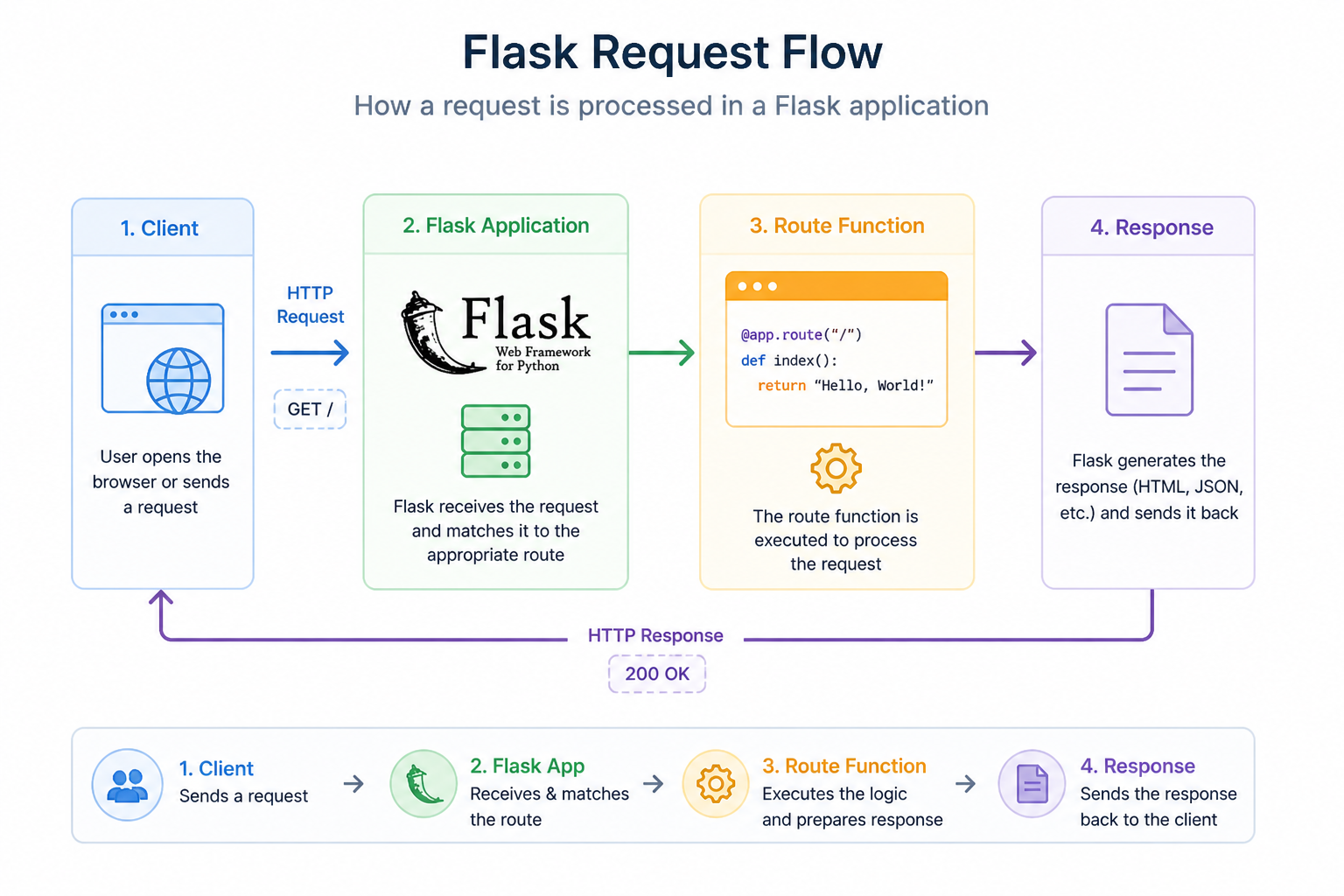
At a high level, Flask connects incoming requests to Python functions.
- A request comes from the client
- Flask matches it to a route
- A function processes the request
- A response is returned
Key Features
Flask provides:
- Routing system
- Request handling
- Response generation
- Template rendering (via Jinja)
- Support for extensions
When to Use Flask
Flask is a great choice when:
- You want full control over your application
- You are building small to medium projects
- You want to understand backend fundamentals
Why This Matters
Flask helps you see how web applications actually work.
- You directly handle routes and requests
- You control how responses are built
- You understand backend flow clearly
This makes it a perfect starting point before moving to more structured frameworks.
Summary
- Flask is a lightweight Python web framework
- It maps requests to Python functions
- It is simple, flexible, and easy to learn
In the next lesson, you’ll build your first Flask application.