
How the Web Works
How the Web Works
Every time you visit a website, a series of events happen behind the scenes in just a few milliseconds.
Understanding this process is essential because every web application you build relies on it.
The Basic Flow
At a high level, the web works through a simple interaction:
- You enter a URL in your browser
- The browser sends a request to a server
- The server processes the request
- The server sends back a response
- The browser displays the result
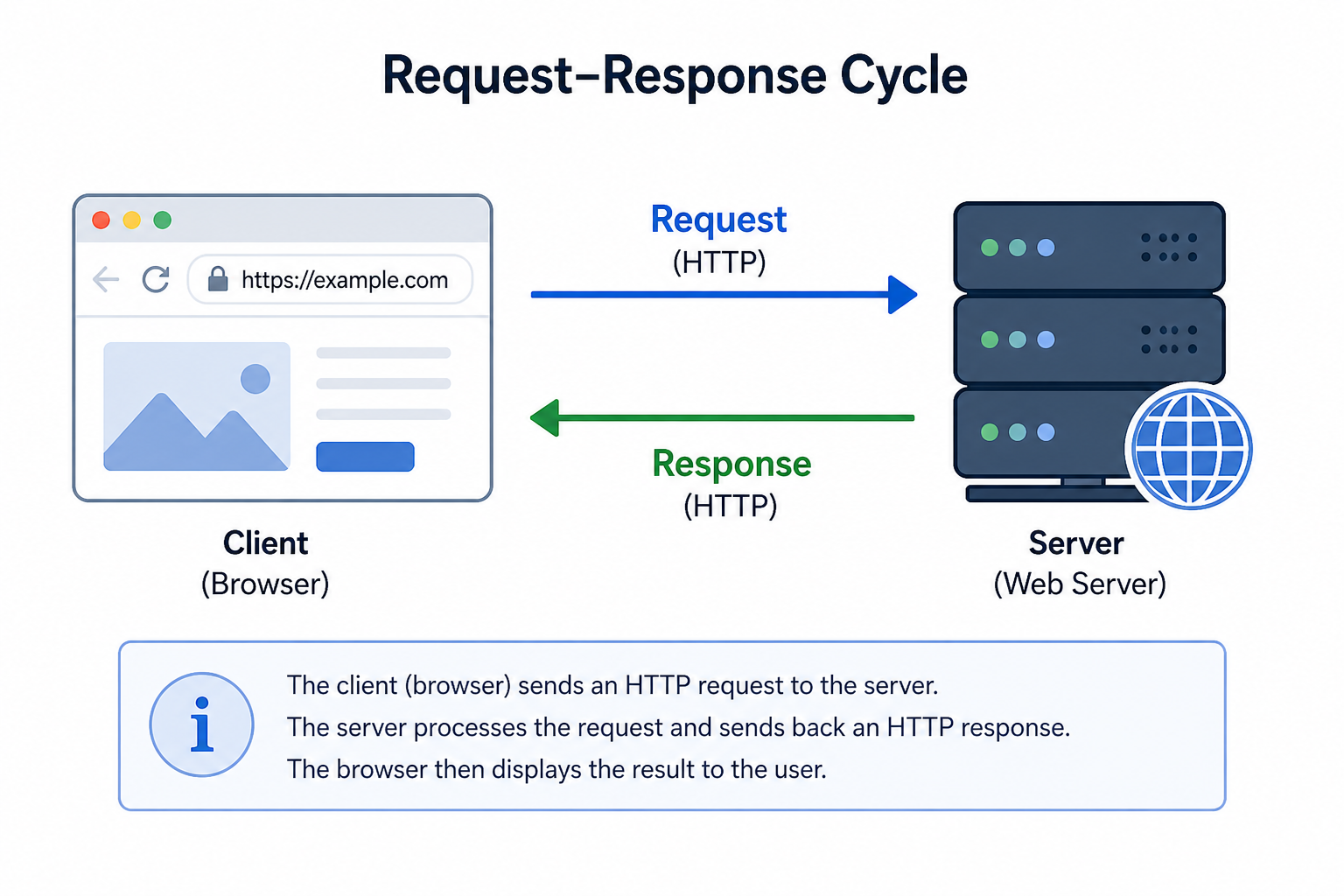
This is known as the request–response cycle, and it is the foundation of all web applications.
What Happens When You Visit a Website
Let’s break it down step by step.
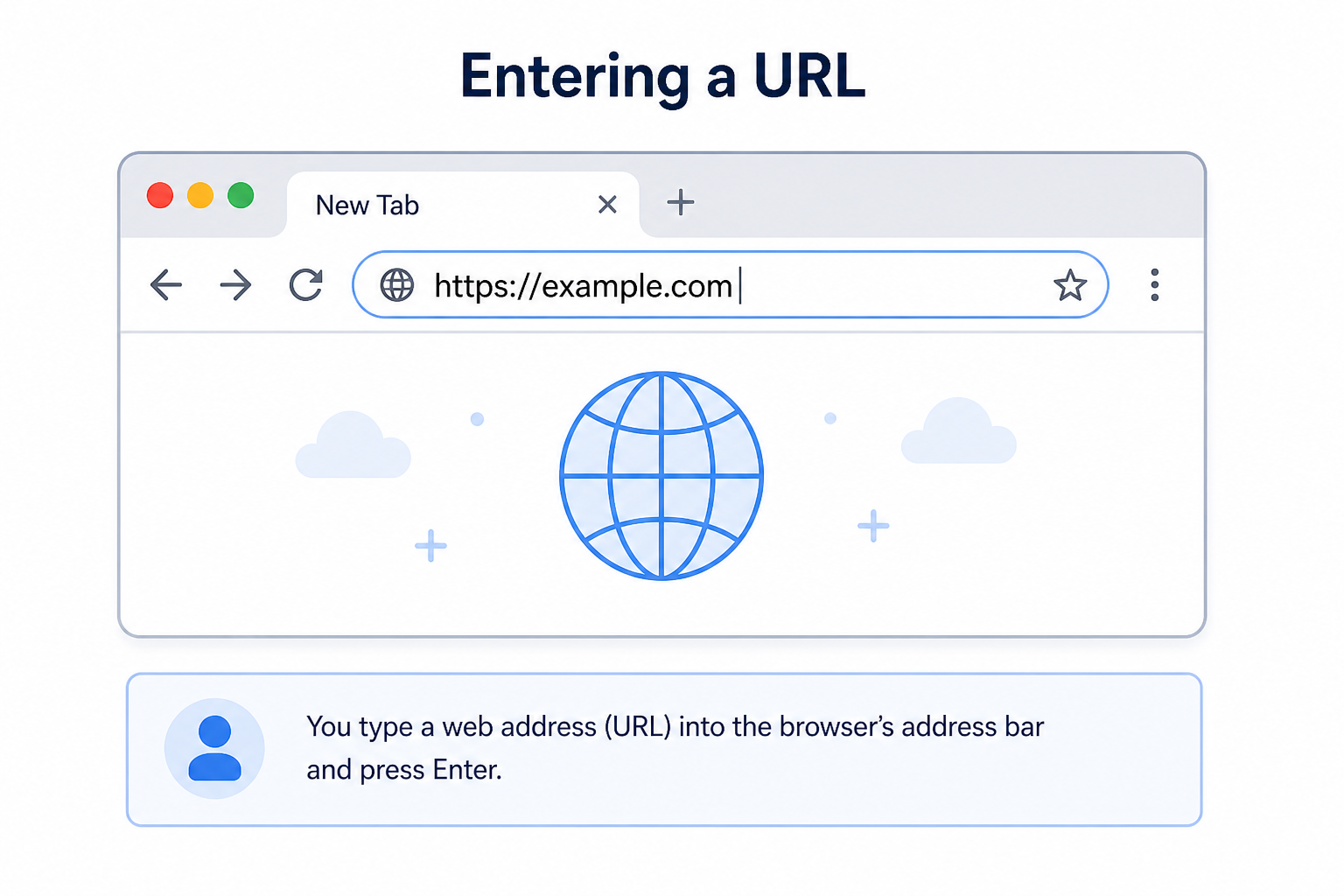
Step 1: Entering a URL
You type a website address like:
Your browser now needs to find where this website lives.
Step 2: DNS Lookup
The browser contacts a DNS server to translate the domain name into an IP address.
- Domain names are human-friendly
- IP addresses identify the actual server
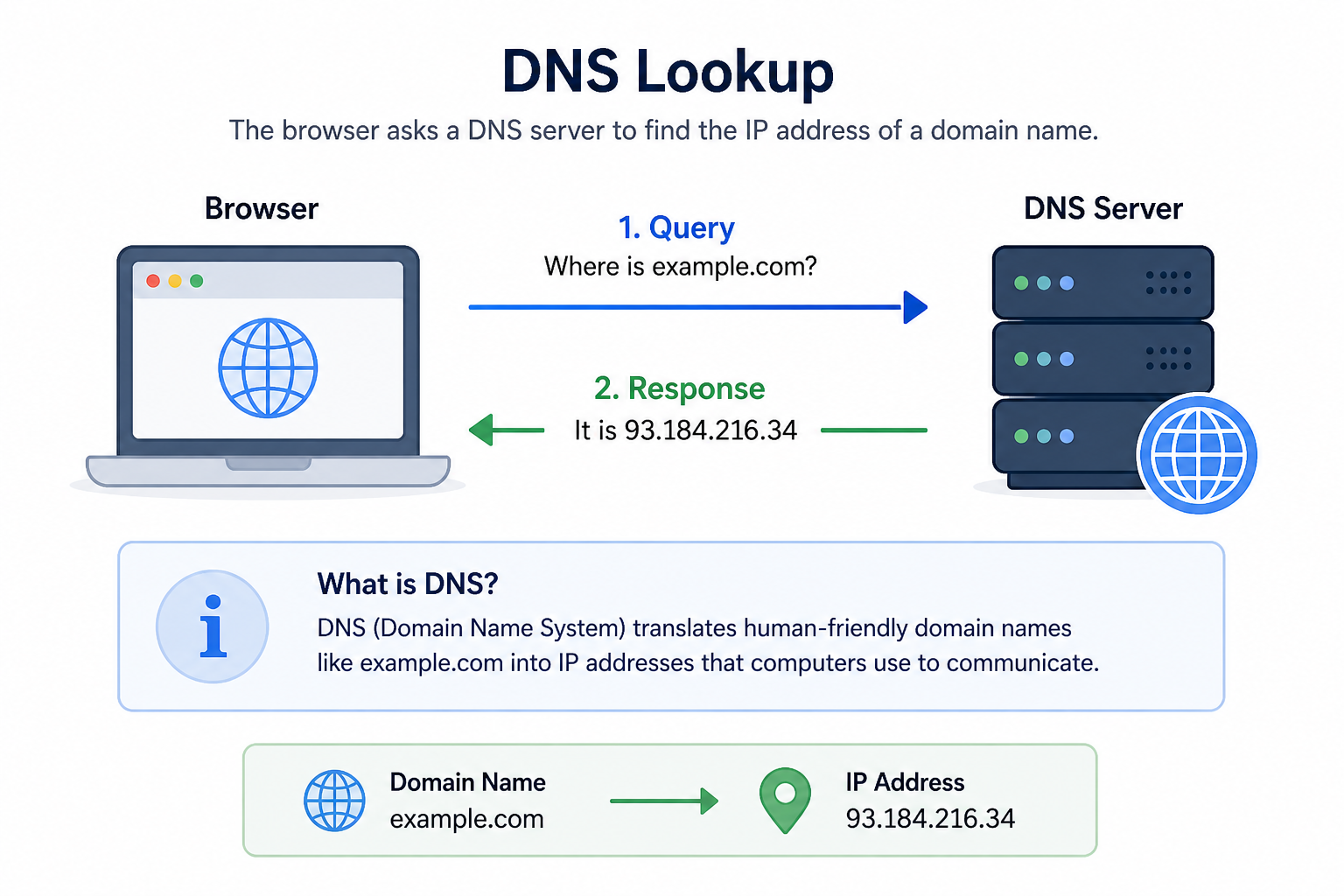
This tells the browser where to send the request.
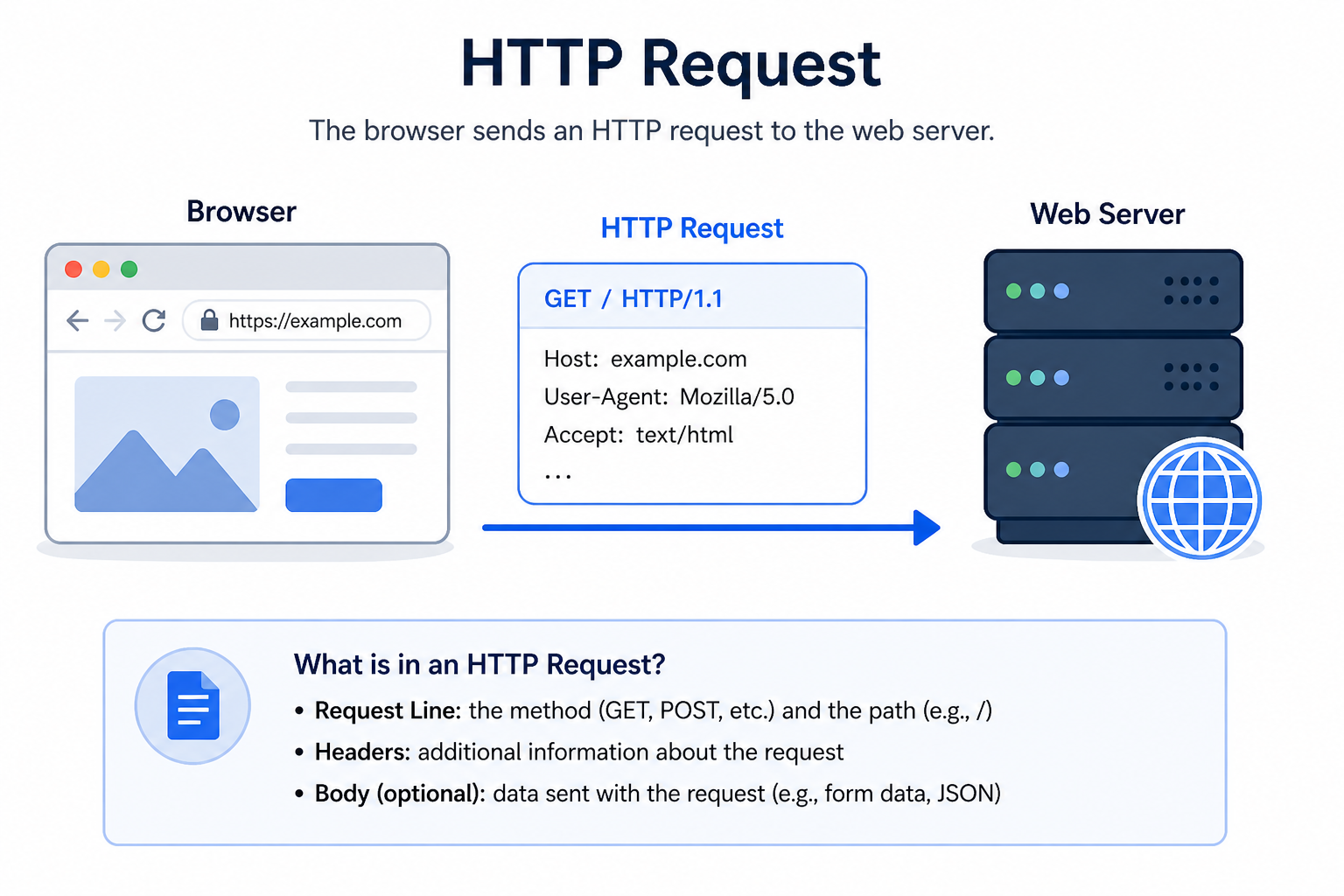
Step 3: Sending the Request
The browser sends an HTTP request to the server.
- Includes method (GET, POST, etc.)
- Includes headers and metadata
- Targets a specific path
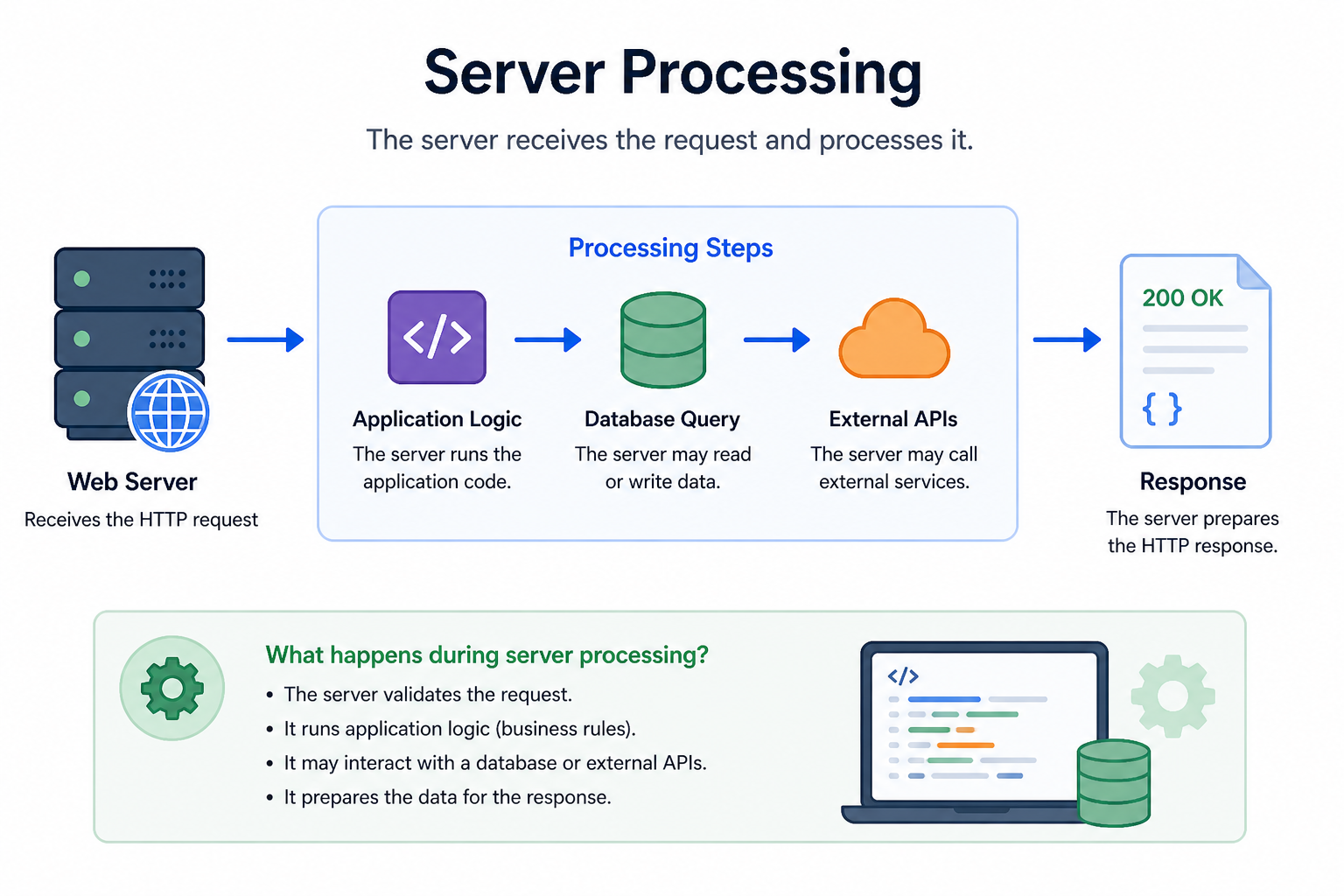
Step 4: Server Processing
The server receives the request and processes it.
- Runs application logic
- May query a database
- May call external APIs
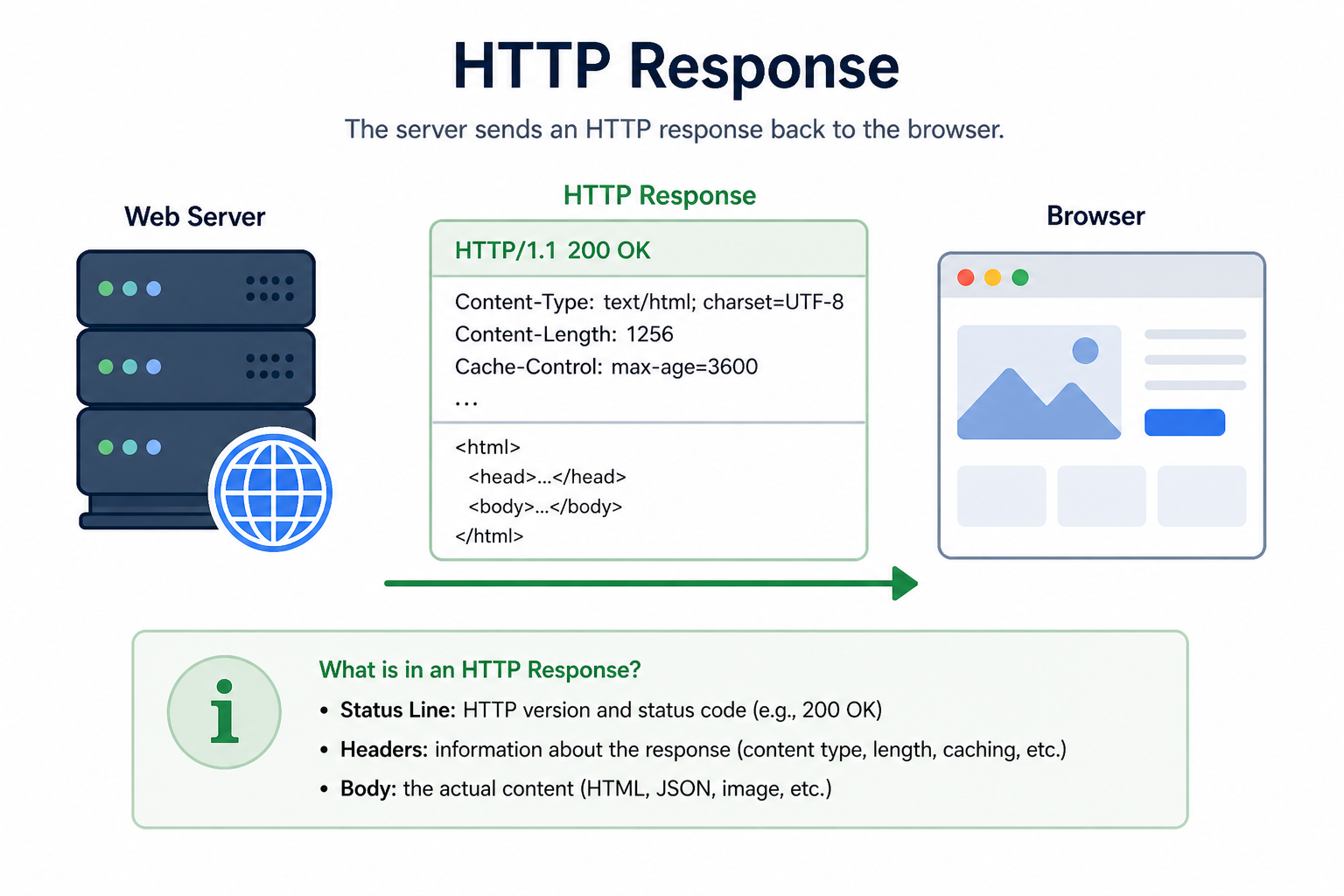
Step 5: Sending the Response
The server sends back an HTTP response.
- Status code (e.g., 200, 404)
- Headers
- Response body (HTML, JSON, etc.)
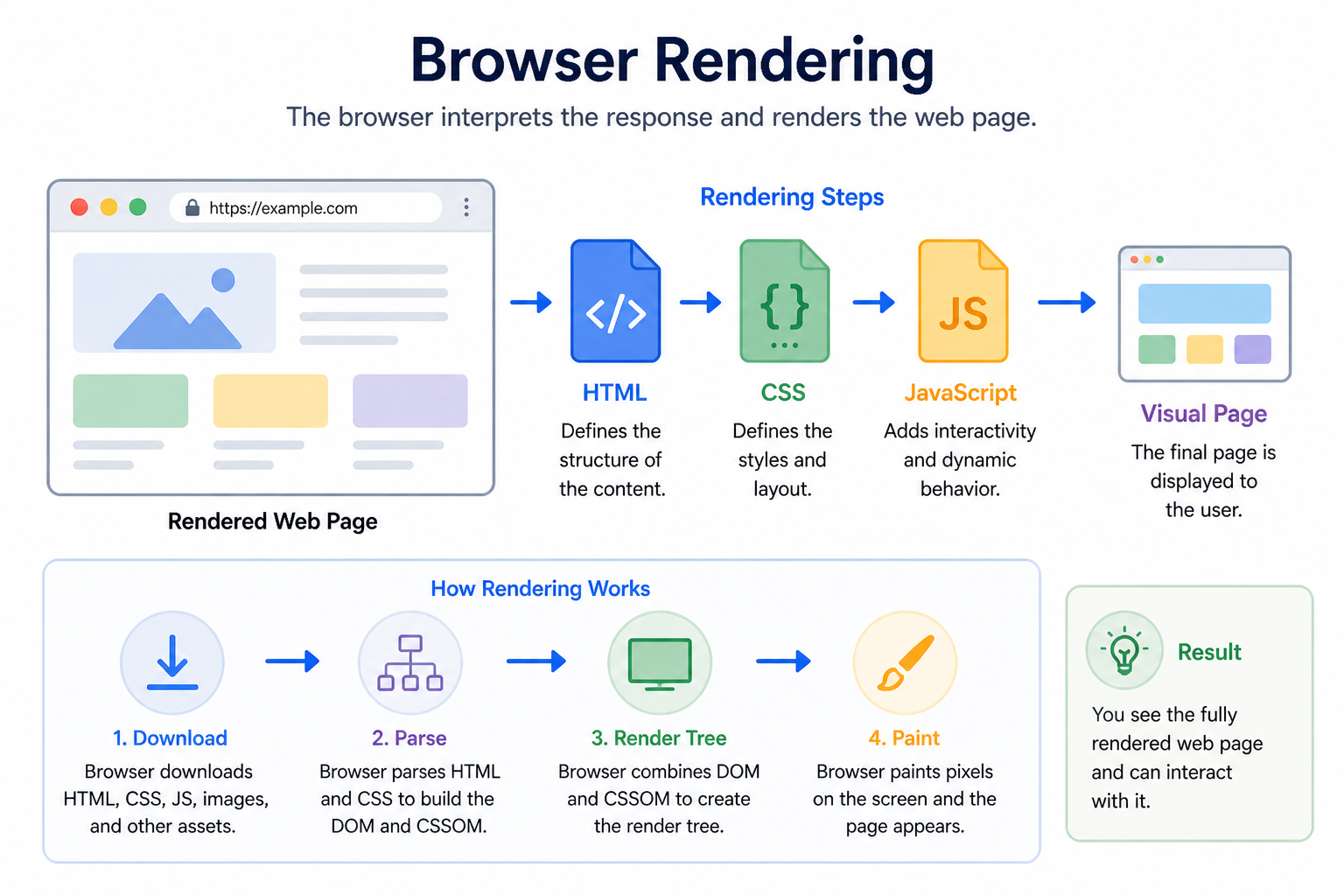
Step 6: Browser Rendering
The browser renders the response.
- HTML builds structure
- CSS handles styling
- JavaScript adds interactivity
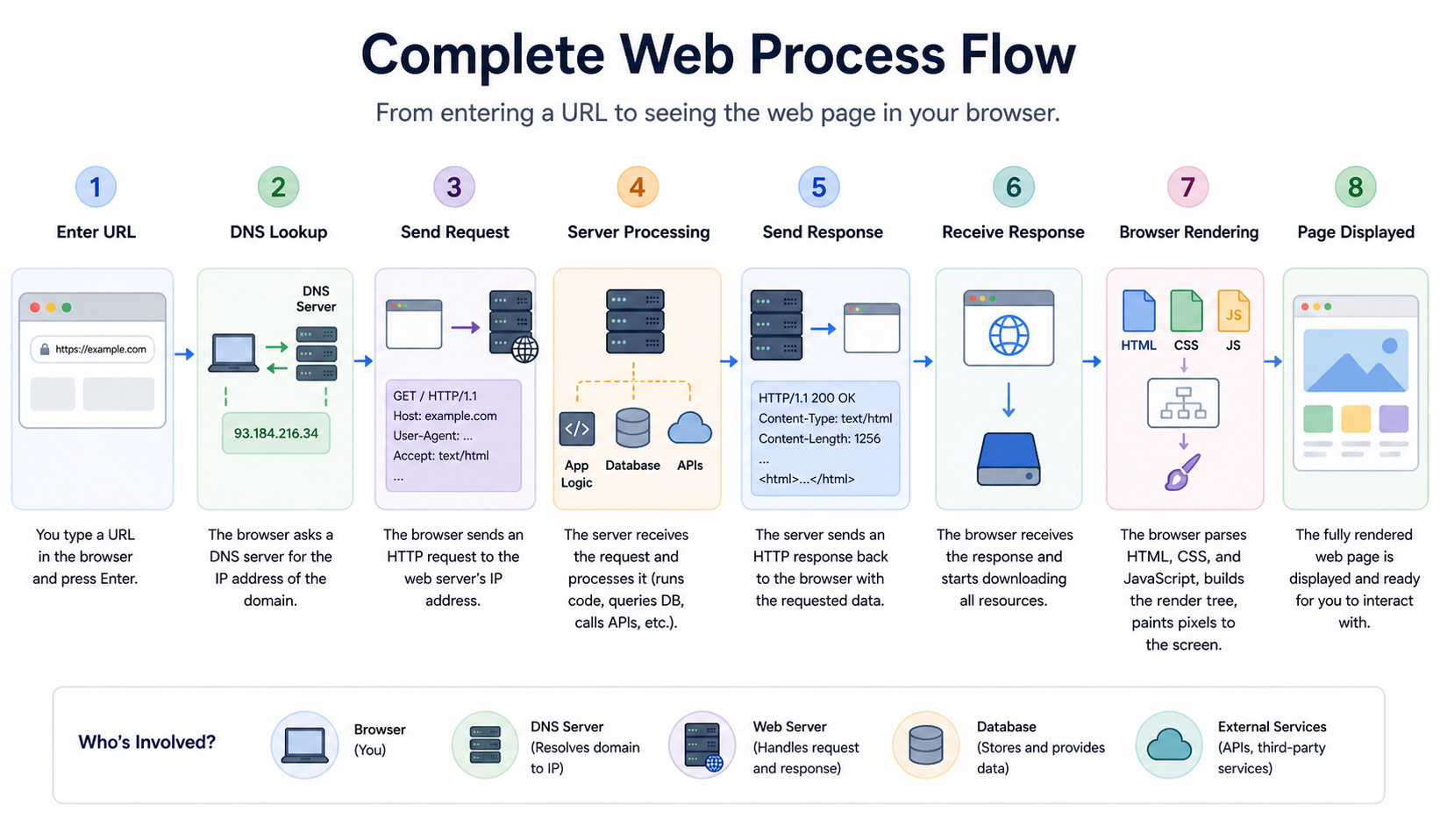
Full Flow Overview
Here is the complete process visualized:
Key Idea
The web works through communication between a client and a server using HTTP.
Every framework in this course builds on top of this exact process.
Why This Matters
Understanding this flow helps you:
- Debug issues more effectively
- Understand how frameworks work internally
- Build better structured applications
Summary
- The web follows a request–response model
- Browsers send requests and servers return responses
- The browser renders the result for the user
In the next lesson, you’ll learn about client and server roles in more detail.