
HTTP Methods
HTTP Methods
HTTP methods define the type of action a client wants to perform on a server.
They are a key part of how web applications communicate and interact with data.
What are HTTP Methods?
When a client sends a request, it includes a method that tells the server what to do.
Common methods include:
- GET
- POST
- PUT
- DELETE
Each method has a specific purpose.
GET
GET is used to retrieve data from the server.
- Does not modify data
- Used for fetching pages or data
- Example: loading a website
POST
POST is used to send data to the server.
- Creates new data
- Often used in forms
- Example: creating a new user account
PUT
PUT is used to update existing data.
- Replaces existing data
- Sends the full updated resource
- Example: updating a user profile
DELETE
DELETE is used to remove data from the server.
- Permanently deletes a resource
- Example: deleting a post or account
How Methods Fit into the Web
HTTP methods work within the request–response cycle.
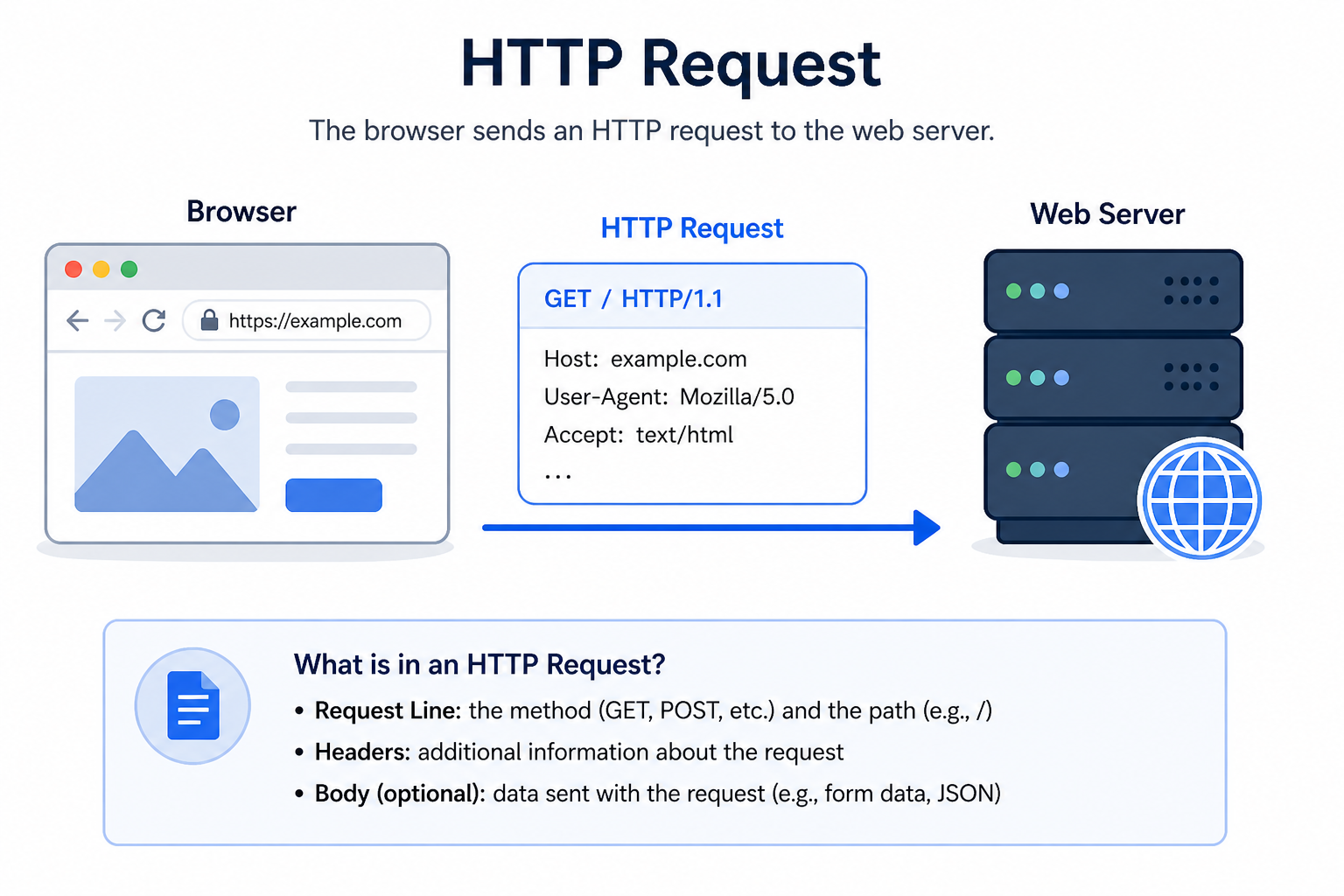
The method tells the server how to handle the request.
Why This Matters
When building applications:
- Flask routes can handle different methods
- FastAPI defines endpoints based on methods
- Django uses methods to control views
Using the correct method ensures your application behaves correctly and follows best practices.
Summary
- HTTP methods define the action of a request
- GET retrieves data
- POST creates data
- PUT updates data
- DELETE removes data
In the next lesson, you’ll learn about HTTP status codes and how servers communicate results.